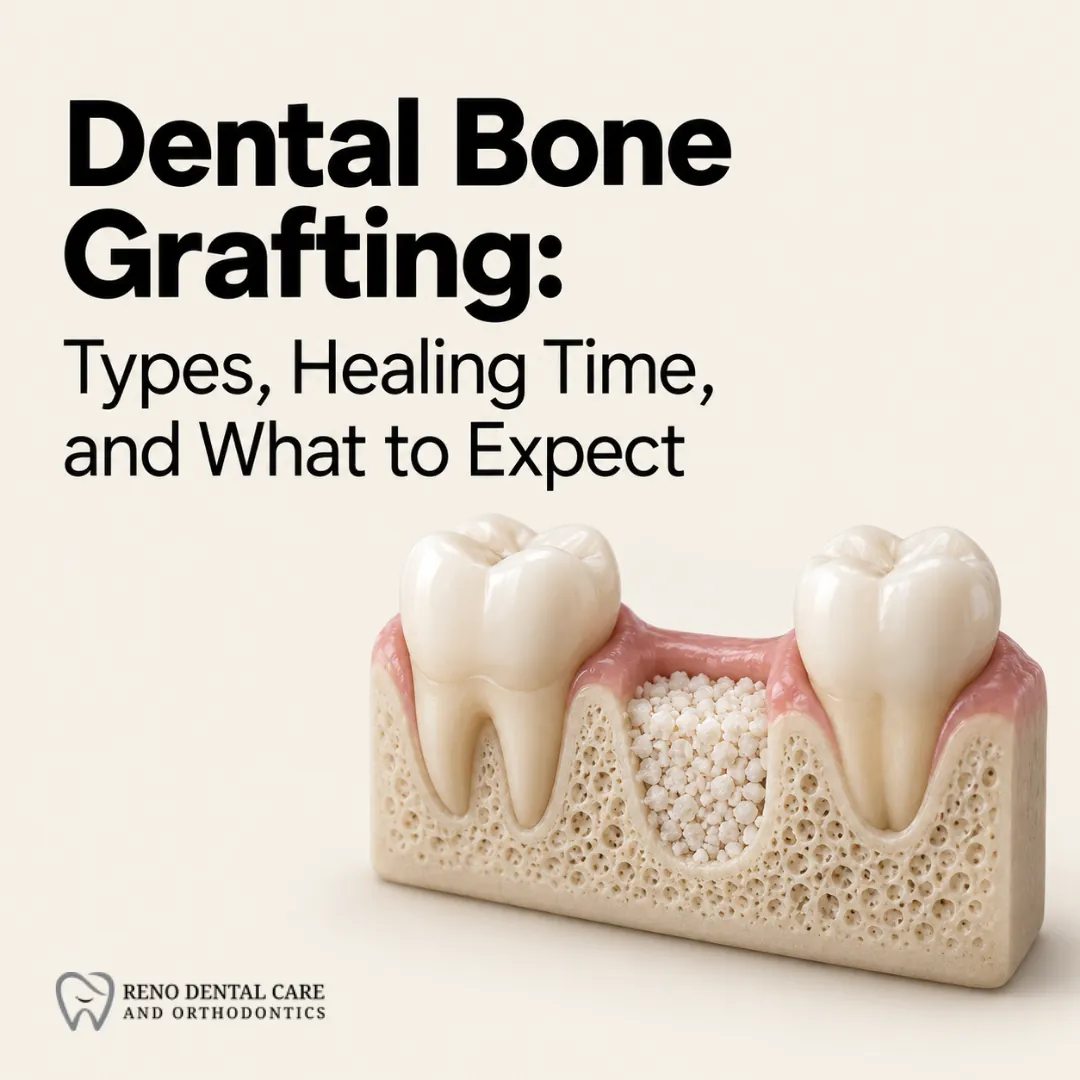
Many people lose jaw bones after a tooth is gone. They cannot get implants without more bone. This can make eating and smiling hard. Oral surgery often aims to rebuild the alveolar ridge for better function.
A bone graft helps bone regeneration. It uses osteoconduction and biomaterials, or grafts like autograft, allograft, xenograft, and synthetic options. Here you will know about graft types, common procedures such as sinus lift and ridge augmentation, healing time, guided tissue regeneration, and postoperative care for implant dentistry.
Dental bone grafts come in various forms, each serving a unique purpose. These grafts support procedures like socket preservation and ridge augmentation to promote healthy dental outcomes.
Autografts come from the patient's own body. This method offers high compatibility and promotes optimal bone regeneration. Allografts use donor bones, typically from human cadavers.
They provide a safe option for those who do not want surgery on their own bone. Xenografts originate from animals, often bovine or porcine sources. These grafts serve as scaffolds for new bone growth in various procedures.
Synthetic options consist of biocompatible materials that mimic natural bone properties. A range of biomaterials exists to support alveolar ridge restoration and other dental needs.
Each type serves specific purposes, whether it's socket preservation or sinus lift surgeries. Understanding these options helps patients make informed choices about their implant dentistry journey ahead.
Socket preservation helps maintain the bone structure after tooth extraction. This procedure involves placing a bone graft into the empty socket. It encourages new bone growth and minimizes shrinkage of the alveolar ridge.
Ridge augmentation adds volume to areas where the jawbone has diminished. Surgeons use various materials, including autografts or synthetic options, to rebuild this area.
A sinus lift is essential for patients needing dental implants in their upper jaw. This method raises the sinus floor and adds bone material to support an implant. Block grafts provide significant support by using a larger piece of donor bone, either from the patient or another source.
Each technique has its specific purpose in improving outcomes in implant dentistry, setting up optimal conditions for successful healing and integration with existing tissue.
The healing process after a dental bone graft involves several stages. Patients can expect to see changes week by week as their body begins to regenerate bone and tissue.
After a dental bone graft, immediate recovery begins right in the office. Patients may feel some swelling and discomfort at the graft site. Ice packs help reduce inflammation during this period. Most doctors recommend sticking to soft foods for a few days.
During the first week, healing progresses steadily. By week two, patients notice less pain and swelling. New bone starts developing around the graft; this process is called osteoconduction.
After four weeks, many begin feeling normal again and can resume daily activities, though some sensitivity might linger. Healing continues over several months as the body regenerates tissue surrounding the alveolar ridge, preparing it for future implants in implant dentistry.
Healing time and implant readiness depend on various factors. Individual health plays a key role. A patient’s overall condition, age, and lifestyle choices can impact how well the body heals after dental bone grafting. Bone regeneration varies for each person; some might heal faster than others.
The type of graft used also matters. Autografts often lead to quicker healing because they come from the patient's own body. In contrast, allografts or xenografts may take longer due to different rates of osteoconduction.
Understanding these factors helps patients manage their expectations during recovery while supporting successful outcomes in dental procedures such as sinus lifts or ridge augmentation.
After a dental bone graft, patients should follow specific tips to ensure proper healing. Keeping the mouth clean helps prevent infection. Gentleoral hygienewith a soft toothbrush proves effective.
Ice packs can reduce swelling during the first few days after surgery. Resting often aids recovery; activities should be limited for at least a week.
Monitoring changes in the site is essential. Patients should look for signs of redness, excessive swelling, or unusual pain. Progress may include minor discomfort and some bleeding but should not escalate to severe issues. Proper care supports bone regeneration while ensuring timely readiness for implant dentistry later on.
Dental bone grafting builds bone where the alveolar ridge is low or damaged. It helps bone regeneration so you can support a tooth or an implant later. The graft acts as a scaffold for new bone to grow, and that process is called osteoconduction.
Surgeons use patient bone, donor bone, animal bone, or man-made material. Each option supports bone regeneration in a different way. Your dentist will pick the best choice for your mouth.
Healing usually takes three to six months, but it can vary. Small grafts heal faster. Large grafts or health problems can slow the process. Your dentist will check the alveolar ridge and tell you when to move to the next step.
The dentist will place the graft and close the site with stitches if needed. Expect some swelling, mild pain, and a short home care plan. Follow the plan to help osteoconduction and steady bone regeneration, and return for checks of the alveolar ridge.
Tell us a little about what you need — we'll be in touch shortly.
8040 S Virginia St, Suite 1 , Reno, NV 89511

Hi! I'm Tooth fairy! Your AI Assistant Ask me anything