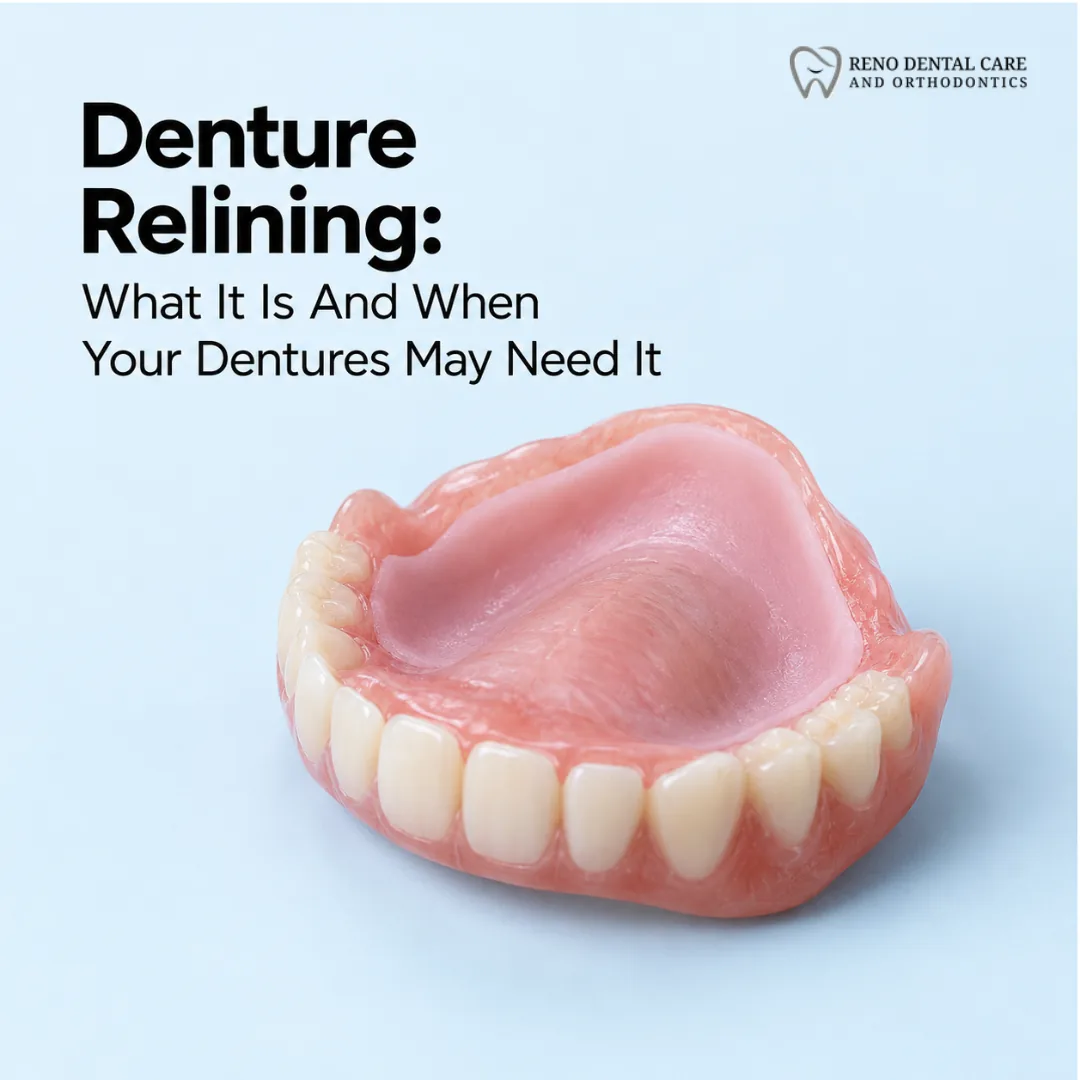
Many people wear dentures and then wonder why they start to slip or rub. It can feel like shoes that suddenly stop fitting. A loose denture can cause sore spots, trouble chewing, and lost confidence.
Jawbone shrinks over time, so dentures can lose their fit. Denture relining adds new material to the denture base to restore fit and comfort. Here you will understand soft and hard relines, common signs to watch for, and what to expect at the dental visit.
Denture relining adds new material to the tissue side of a denture to improve fit and comfort. A prosthodontist recalled a patient who needed a reline six months after tooth loss, as gum tissue had changed and caused sores.
Soft relines cushion sore spots and reduce irritation. Hard relines restore the base for long-term fit and oral health.
A clinician once adjusted a removable denture at a routine visit and cut the appointment time in half by offering a quick soft reline in the chair. Patients often report better comfort and clearer speech after a reline, and dentists use relines to limit other denture adjustments.
Dentists use different methods to improve how dentures fit. Some materials work best for sore gums, while others create a firm grip for daily wear.
Soft relines offer several advantages for denture wearers. They provide a comfortable cushion between the dentures and the gums. This cushioning reduces soreness and irritation, especially in sensitive areas of the mouth.
Patients often experience less discomfort with soft relines, making daily activities like eating and speaking much easier.
These types of relines adapt well to the changes that occur in the mouth over time. As gums shrink or shift, soft relines can help maintain a snug fit without applying too much pressure.
This flexibility promotes better oral health by minimizing sore spots while ensuring optimal patient comfort with removable dentures. Regular adjustments can lead to longer-lasting satisfaction with dental prosthetics overall.
Hard relines play a crucial role in denture care. They reshape the base of dentures to fit more snugly against the gums. This adjustment improves comfort and stability for the wearer.
As time passes, changes in mouth structure can create gaps between dentures and gum tissue. Hard relines fill these gaps effectively.
These procedures also help maintain oral health. Poor-fitting dentures can lead to sore spots and irritation on gum tissue. By addressing these issues with hard relines, individuals reduce discomfort and prevent complications like infections or additional dental problems.
Regular hard relining keeps removable dentures functional for years, promoting patient comfort and confidence in their smiles.
Sometimes, dentures can feel loose or uncomfortable. This is often a sign that they need a reline.
Denture relining is a process that adjusts the fit of your dentures. It helps them sit snugly against your gums, improving comfort and function.
Your dentures may need relining if they feel loose or uncomfortable. Changes in your mouth shape can occur over time due to weight loss, aging, or gum health changes.
Most people benefit from denture relining every one to two years. Regular check-ups with your dentist will help determine the right timing for you.
Not at all! The procedure is generally quick and easy, often requiring minimal discomfort. Your dentist will make sure you're comfortable throughout the process.
Tell us a little about what you need — we'll be in touch shortly.
8040 S Virginia St, Suite 1 , Reno, NV 89511

Hi! I'm Tooth fairy! Your AI Assistant Ask me anything