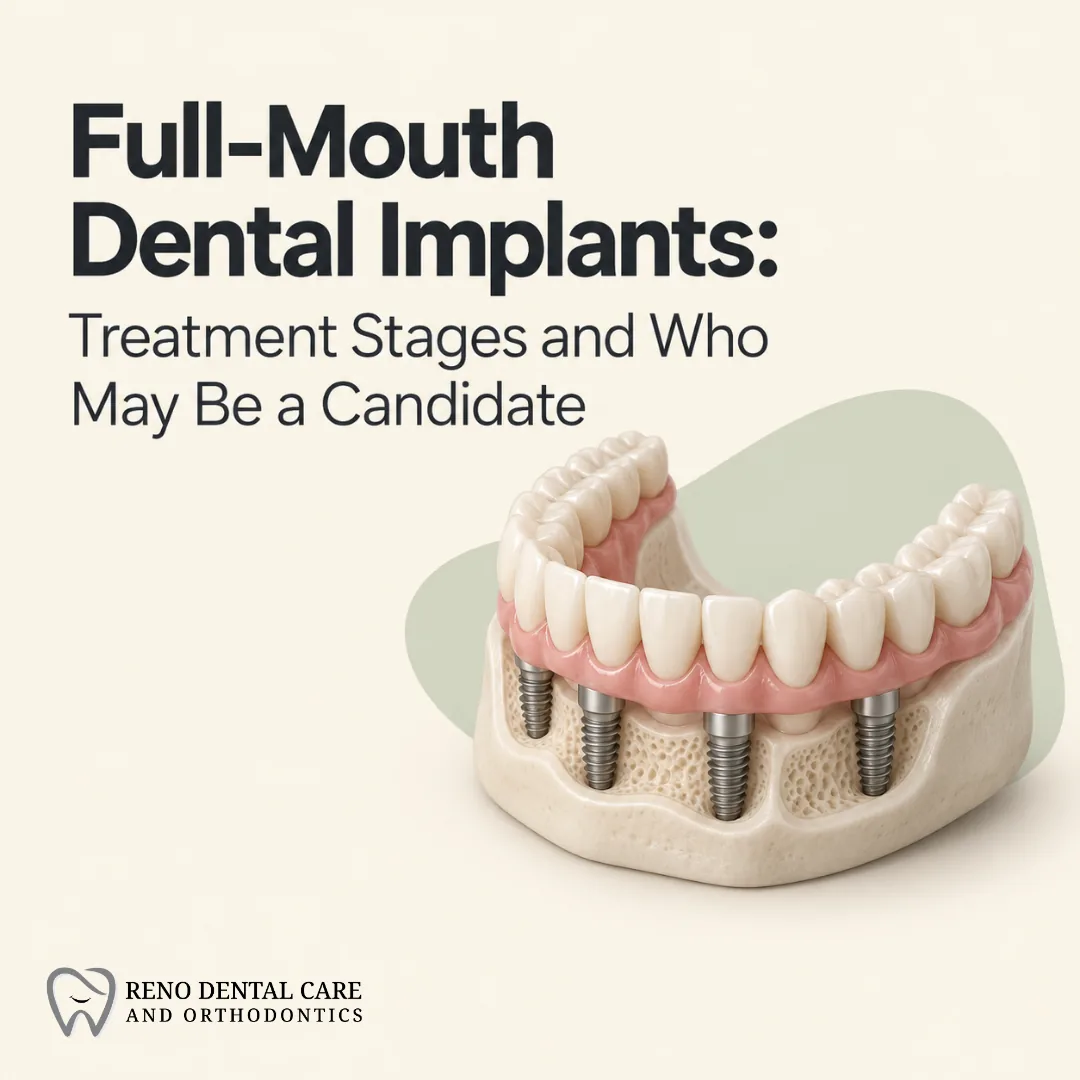
Many people lose many teeth and struggle to eat, speak, or smile with ease. They want a steady tooth replacement that looks and works like natural teeth. Dental implants and oral surgery, often guided by prosthodontics, can offer that long-term solution.
One fact is clear: full-mouth dental implants can restore function and appearance, but they usually need careful treatment planning and stages like bone grafting and healing. Here you will know implantology steps, gum health checks, candidate assessment, and what to expect from dental restoration.
Stages of full-mouth dental implant treatment involve several key steps. First, the team conducts an initial assessment and gathers diagnostic images to understand the patient's needs.
Then, they create a clear treatment plan that may include necessary procedures like bone grafting or extractions. Next, trained professionals surgically place implants and allow time for healing before adding abutments and final restorations.
Dental professionals conduct an initial assessment to determine a patient's suitability for full-mouth dental implants. They evaluate jawbone density and oral health status during this stage.
Diagnostic imaging, such as X-rays or CT scans, helps them see the bone structure clearly. This step is crucial for understanding any issues that might affect the treatment.
Medical considerations also play a vital role in assessing candidates. Patients often share their medical history and lifestyle habits with their dentists. First-hand experience shows that this information allows dental experts to create personalized treatment plans. Knowing about existing conditions can influence the choice of procedures, like bone grafting or extractions, before implant placement occurs.
Treatment planning and preparatory procedures play a crucial role in the success of full-mouth dental implants. The dental team conducts thorough evaluations to determine the patient’s needs.
This step often involves diagnostic imaging to assess jawbone structure and gum health. Patients may need bone grafting if their jaw lacks adequate density for implant placement. Bone grafting helps create a stable foundation for the implants.
Extractions might also be necessary if damaged or decayed teeth remain in place. Removing these teeth can improve oral health and prepare the mouth for implants. The team collaborates with patients during this phase, ensuring a smooth process ahead of surgery. Clear communication about all procedures allows everyone involved to feel more comfortable throughout treatment.
Surgeons place dental implants into the jawbone during this critical stage. They use local anesthesia to ensure comfort. The process requires precision, as proper placement affects long-term stability and function.
After surgery, healing takes time. Typically, patients need several months for osseointegration to occur. This process allows the bone to fuse with the implant securely.
During recovery, individuals must maintain good oral hygiene and follow their dentist's advice closely. Regular check-ups help monitor progress and address any concerns. Successful healing leads to the next step: abutment placement and final restoration of a beautiful smile.
After the healing phase, the dental team places abutments on the implants. Abutments serve as connectors for dentures or crowns. This step is crucial for creating a stable foundation for tooth replacement. The dentist evaluates everything before proceeding to final restoration.
During final restoration, custom-made prosthetics are attached to the abutments. These restorations may include fixed bridges or removable dentures based on individual needs. Patients often express happiness after seeing their new smiles in place. Full-mouth dental implants enhance both function and appearance, making daily activities easier and boosting confidence significantly.
Many people can benefit from full-mouth dental implants, but candidates should have healthy jawbone density and good oral health. Medical history also plays a crucial role in determining eligibility. Age and lifestyle habits can influence candidacy too.
Jawbone density plays a crucial role in full-mouth dental implants. A healthy jawbone provides support for the implants. If someone has low bone density, they may require procedures like bone grafting before receiving implants. Oral health status also matters greatly. Conditions such as gum disease can complicate the treatment process.
A strong foundation of healthy gums and teeth supports successful implant surgery. Patients with good oral hygiene often experience better outcomes after surgery. Regular dental check-ups help maintain optimum oral health, ensuring candidates meet necessary requirements for this procedure.
Individuals considering full-mouth dental implants must evaluate their medical conditions and overall health. Certain health issues can impact the success of oral surgery. Conditions such as uncontrolled diabetes, heart disease, or immune disorders may complicate the procedure.
Patients should disclose any medications they take since some might interfere with healing.
Age also plays a role in candidacy for dental implants. Younger individuals may heal faster than older adults. Lifestyle habits like smoking can negatively affect implant outcomes too.
Dentists assess these factors thoroughly to ensure safe and effective treatment planning for each patient’s unique needs before moving on to jawbone density and oral health status.
Age plays a significant role in determining candidacy for full-mouth dental implants. Younger patients often have stronger jawbone density and better oral health, which can lead to successful outcomes. Patients should also consider their lifestyle habits. Smoking or excessive alcohol use can hinder healing and affect the success of implants.
Other factors include medical conditions that may impact recovery. Chronic illnesses like diabetes can complicate the process, making careful evaluation necessary before any oral surgery.
A thorough assessment ensures that candidates receive appropriate treatment plans tailored to their needs. This supports better results with full-mouth dental implants while emphasizing overall health and wellness throughout the procedure.
Full-mouth Dental implants treatment begins with an exam and imaging. The team plans care and treats infection or decay. If needed, they place bone grafts. Clinicians then place the Dental implants into the bone. Healing follows as the implants fuse with bone, then clinicians attach the prosthetic teeth.
Adults who need many teeth replaced and who are in good health may qualify. They need enough bone, or they may get grafts first. The dental team evaluates health, bone, gums, and habits like smoking before approving Dental implants.
The process often takes months to complete. Bone grafts or healing time can extend the timeline. Dental implants need time to osseointegrate, to fuse with bone, before permanent teeth go on.
Risks include infection, implant failure, and bone loss. Good home care and regular follow-up lower risks. Patients must brush, floss, and see their dental team for checks and cleanings.
Tell us a little about what you need — we'll be in touch shortly.
8040 S Virginia St, Suite 1 , Reno, NV 89511

Hi! I'm Tooth fairy! Your AI Assistant Ask me anything