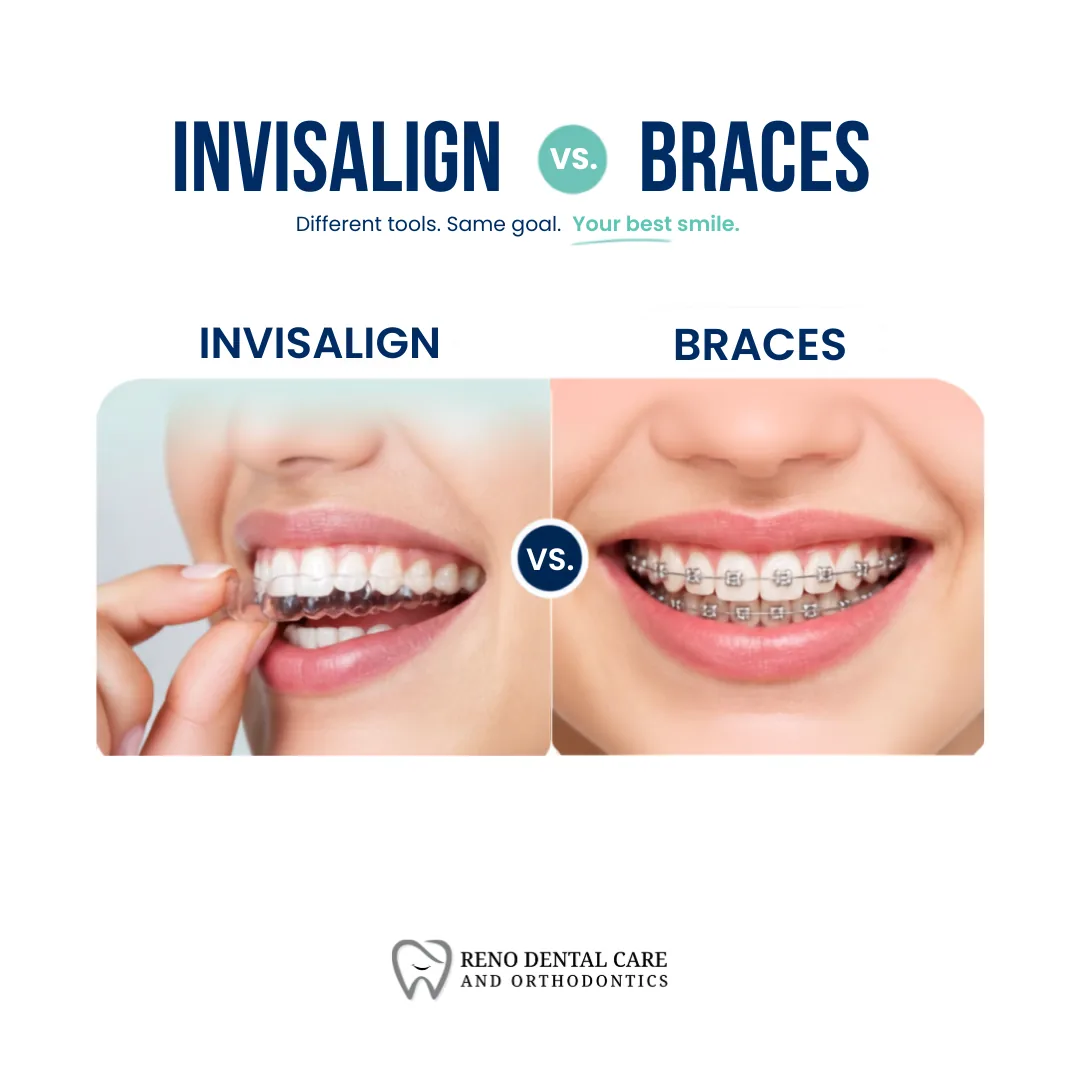
Many people worry about crooked teeth and how treatment will fit their life. They search for answers on Invisalign vs. Braces to compare orthodontics options.
Invisalign offers a better aesthetic appearance than traditional braces. Here you will know about pros and cons, comfort, eating, oral hygiene, treatment time, and costs for aligners and metal braces.
Invisalign and braces each have distinct advantages. Users should weigh comfort, appearance, and treatment effectiveness when choosing the right option for their smile.
Invisalign offers a clear advantage in aesthetics over traditional braces. The aligners are virtually invisible, making them an attractive option for those concerned about appearance.
Patients can wear Invisalign without drawing attention to their orthodontic treatment. Traditional braces, with their metal brackets and wires, stand out more due to their visibility.
Braces remain fixed in place until the treatment concludes. This means they constantly show on the teeth. For individuals who value aesthetic considerations during treatment, clear aligners serve as a better choice compared to dental braces.
Invisalign aligners offer significant comfort and convenience compared to traditional braces. Patients can easily remove the aligners during meals, allowing them to enjoy their favorite foods without any restrictions.
This feature also helps maintain oral hygiene since individuals can take out the aligners for brushing and flossing. Traditional braces remain fixed in place, which may cause discomfort while eating certain foods or cleaning teeth properly.
Fewer dental visits are often required with Invisalign too; patients typically attend fewer appointments than those with metal braces. The need for daily compliance rests on the patient using Invisalign, as consistent wear is essential for effective tooth movement.
Meanwhile, traditional braces do not require removal and work continuously throughout treatment time. Each option has its own level of comfort based on individual needs and preferences in orthodontics.
Comfort and convenience are significant aspects of the treatment journey. Eating and oral hygiene differ greatly between Invisalign and braces. Patients using Invisalign can remove their clear aligners during meals.
This feature allows for normal eating without any restrictions on food choices. Maintaining oral health becomes easier too, as the aligners come out for brushing and flossing.
Dental braces remain fixed throughout treatment, making it challenging to keep teeth clean. Food particles often get trapped around brackets and wires, leading to potential plaque buildup.
Good oral hygiene practices become essential with traditional braces to avoid cavities or gum issues. Both options help in teeth straightening but have different impacts on daily routines regarding eating and cleaning teeth effectively.
Invisalign and traditional braces both effectively straighten teeth. Invisalign works through clear aligners that must be worn consistently to achieve results. Patients have the responsibility to wear these aligners daily for success. This places a heavy emphasis on patient compliance.
Traditional braces remain fixed in place throughout treatment, providing easier management since patients do not need to remember daily wear schedules. Some cases may require more complex movements that traditional braces can handle better than Invisalign.
Each option addresses different dental needs and complexities, making it essential for patients to consider their specific goals in orthodontics.
Cost and treatment time vary significantly between Invisalign and braces, affecting many people's decisions. Invisalign typically costs more than traditional braces. Factors like dental insurance can influence the final cost.
The length of treatment depends on individual needs and goals, which might change over time. Explore your options to find what suits you best!
The price range for Invisalign often falls slightly higher than that of traditional braces. In some dental practices, both options may carry the same treatment cost. Patients should consider factors affecting cost, such as location and provider experience.
Traditional braces tend to be more commonly covered by dental insurance plans, especially for children and teenagers. Invisalign aligners may require an investment due to their advanced technology and aesthetic appeal. The costs associated with clear aligners can vary based on individual treatment needs.
Ultimately, patients should weigh these financial aspects against their desired outcomes in teeth straightening while considering coverage from dental insurance.
Several factors influence the cost comparison between Invisalign and traditional braces. Insurance coverage plays a significant role. Traditional braces often receive more support from dental insurance, especially for children and teenagers. Patients may find that both methods carry similar costs at some practices.
Location is another variable affecting pricing. The average expense can differ based on where a patient receives treatment. Typically, Invisalign may cost slightly more than traditional braces in specific cases due to its advanced technology.
Treatment complexity also matters; more complicated cases tend to incur higher fees, regardless of whether patients choose clear aligners or dental braces.
Invisalign treatment usually lasts around 12 to 18 months. This timeframe can vary based on individual needs and complexity. Patients may need to wear their clear aligners for at least 20 to 22 hours a day for effective results. Consistent daily wear plays a crucial role in ensuring progress.
Traditional braces often require a similar duration, typically ranging from 1 to 3 years. While the overall time frame is roughly comparable, the experience differs significantly between methods.
Invisalign offers fewer dental visits during treatment compared with braces, making it more convenient for some patients seeking teeth straightening options.
Choosing the right option for your smile requires careful thought. Consider your lifestyle, dental needs, and personal preferences to find the best fit.
Lifestyle plays a crucial role in the choice between Invisalign and braces. For those who value aesthetics, Invisalign offers a clear advantage. It provides a less noticeable option for teeth straightening, making it ideal for adults or teens concerned about appearance. Comfort is another factor; aligners can be removed during meals, allowing users to eat without restrictions.
Oral hygiene becomes simpler with Invisalign since patients can easily take out the aligners to brush and floss. This flexibility greatly benefits individuals focused on maintaining good oral health throughout their treatment.
On the other hand, traditional braces stay fixed in place, eliminating any concerns of daily compliance but requiring more care when eating and cleaning teeth.
Each person's dental needs vary widely. Some may require simple alignment for minor issues, while others face more complex challenges. Traditional braces often work well for those with complicated issues like severe crowding or bite misalignment. These fixed appliances offer constant pressure on teeth and do not rely on patient compliance.
On the other hand, Invisalign suits individuals with less complex cases or specific aesthetic preferences. Clear aligners provide a discreet option that makes wearing them easier in social situations.
Patients using Invisalign must wear aligners consistently to ensure effectiveness; failure to do so can delay outcomes. Understanding individual dental needs helps determine the best choice between clear braces and traditional options. Next, cost plays a significant role in this decision-making process.
Personal preferences and goals play a crucial role in choosing between Invisalign and braces. Many people prefer the aesthetic benefits of Invisalign since it offers a clear aligner that is less visible than traditional braces. This option appeals to those who value their appearance during treatment.
Those who lead busy lives may favor the convenience of removable aligners. Patients can easily take out Invisalign while eating, which allows them to enjoy food without restrictions.
Regular brushing and flossing also become simpler with these clear aligners, as they can be removed for oral hygiene routines. For patients focused on daily compliance, traditional braces might be suitable because they do not require removal or adherence to specific wear times; this fixed method simplifies the commitment needed for effective teeth straightening.
Clear aligners fit over teeth and come out for eating. Dental braces attach to teeth and stay fixed. Orthodontics uses both for teeth straightening. Aligners work well for mild to moderate alignment. Braces handle complex tooth moves better.
Clear aligners look nearly invisible and help aesthetic dentistry. You can brush and floss normally, so oral health stays easier to manage. Braces can trap food and need careful cleaning. Both can improve oral health once treatment ends.
Treatment options include clear aligners, the Invisalign brand, or dental braces. Cost comparison depends on case complexity, time, and the clinic. Aligners and braces often have similar price ranges. Insurance may cover part of the cost. Ask your orthodontist for a clear plan.
People with simple teeth straightening often choose clear aligners. Those with harder alignment problems often need dental braces. Orthodontics teams decide by exam and scans. Both routes need retainers after treatment to keep results.
Tell us a little about what you need — we'll be in touch shortly.
8040 S Virginia St, Suite 1 , Reno, NV 89511

Hi! I'm Tooth fairy! Your AI Assistant Ask me anything